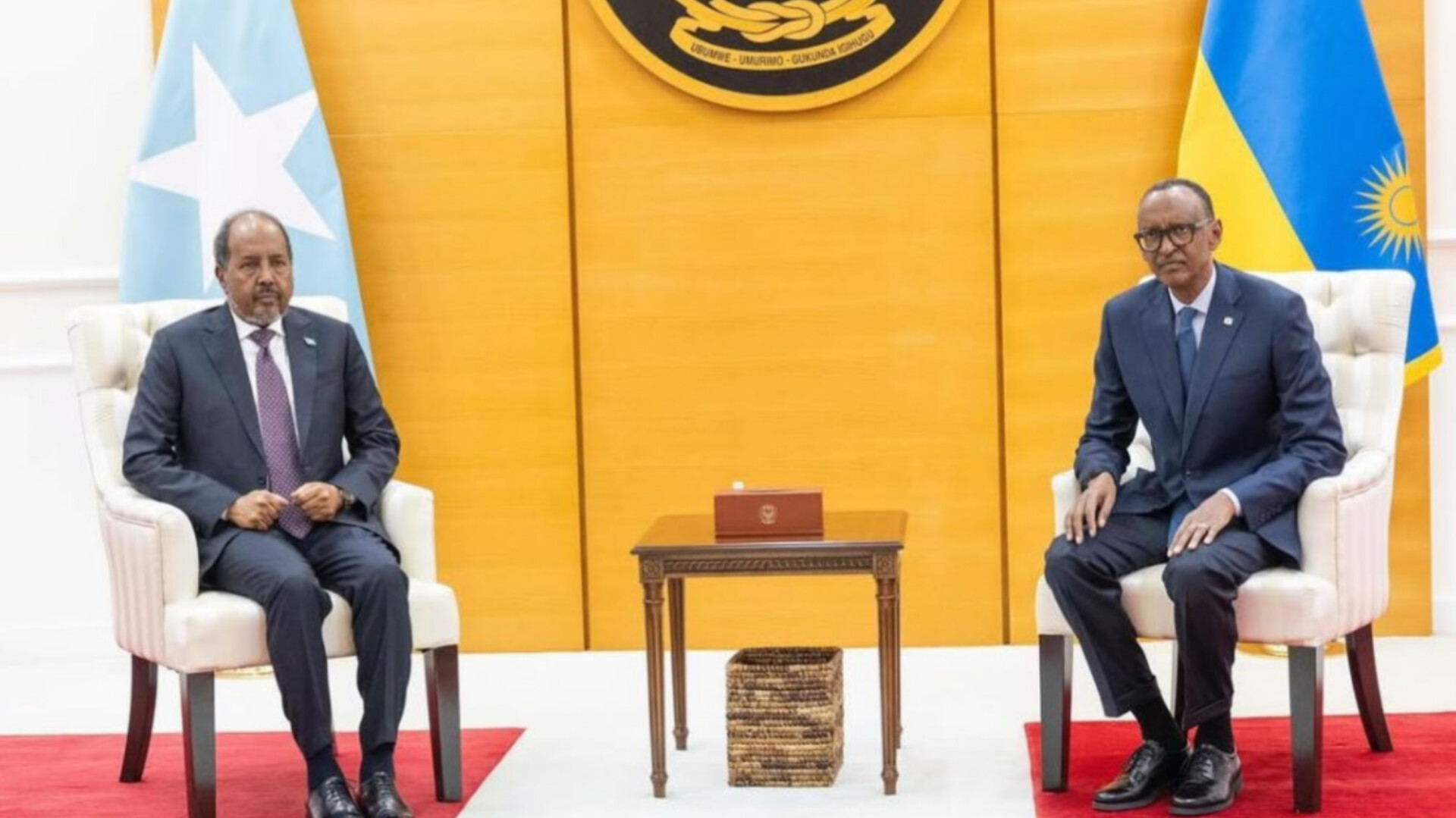
The Government of Rwanda has stated that it does not support the separation of Somalia and Somaliland, emphasizing that the priority should be peace, dialogue, and development in line with international law.
This position was announced in an official statement released on the night of December 28, 2025, following renewed international debate over Somaliland’s status.
Rwanda aligns with EAC and African Union position
Rwanda said it supports the positions of both the East African Community (EAC) and the African Union (AU), organizations of which Somalia is a member.
In its statement, the EAC reaffirmed that it recognizes the Federal Republic of Somalia as a single, sovereign state, governed by the Somali government.
“The East African Community recognizes the Federal Republic of Somalia as one country under the authority of the Somali government,” the EAC said.
The regional bloc also stressed that it respects Somalia’s borders as they were defined at the time of independence and called for unity and respect for territorial integrity.
“The EAC urges the promotion of unity and respect for the sovereignty and territorial integrity of the Federal Republic of Somalia, in accordance with international law,” the statement added.
Renewed debate following Israel’s announcement
The debate over Somaliland’s independence intensified after Israel announced its recognition of Somaliland as an independent state.
On December 26, 2025, Israel’s Prime Minister and Minister of Foreign Affairs signed a declaration recognizing Somaliland and expressing readiness to establish cooperation in areas such as agriculture, health, technology, and economic development.
Israeli Prime Minister Benjamin Netanyahu later held a phone conversation with Somaliland President Dr. Abdirahman Mohamed Abdalla, praising his leadership and commitment to peace and security, and invited him to visit Israel in the future.
Somaliland welcomes recognition, Somalia rejects it
The President of Somaliland described December 26 as a historic day, stating that it marked the first time a country had officially recognized Somaliland as an independent state.
“This step confirms a long-standing reality. Somaliland meets all legal, political, and institutional requirements to be recognized internationally,” he said, noting that Somaliland has pursued independence for more than 30 years.
However, the Somali government immediately condemned Israel’s decision, saying it violated Somalia’s sovereignty and territorial integrity. Somalia reiterated that Somaliland remains part of its territory, despite having autonomous institutions for decades.
Somalia warned that recognizing Somaliland as an independent state could threaten security in the Horn of Africa and encourage other regions to seek separation.
In a statement, the Somali government called on its citizens to remain united and urged international partners to respect international law, non-interference principles, and the sovereignty of states.
Historical background of Somaliland
Somaliland covers an area of approximately 176,120 square kilometers and has a population of over six million people. It is located in northwestern Somalia.
Historically, Somaliland was known as British Somaliland, while southern Somalia was referred to as Italian Somaliland. The two territories united in 1960 to form the Republic of Somalia.
Over time, political and economic disagreements led Somaliland to pursue self-governance, eventually declaring independence, though it has not been widely recognized internationally.
Rwanda–Somalia relations
Rwanda has strongly opposed Somalia’s fragmentation, noting that the two countries maintain strong bilateral relations.
Rwanda and Somalia cooperate in areas including counterterrorism, combating transnational crime, human trafficking prevention, and fighting armed groups. They also collaborate on cybersecurity, illegal arms trafficking, intelligence sharing, police training, and capacity building.
Rwanda emphasized that preserving Somalia’s unity is essential for peace, stability, and security in the Horn of Africa.


Post Comment