Although piloting is often viewed as a highly technical profession that requires advanced academic qualifications, officials from Akagera Aviation School, Rwanda’s only pilot training institution, say the career is accessible even to high school graduates, provided they meet specific requirements. They add that pilot training can be completed in less than two years.
Speaking to the media, Joseph Ndayishimiye, the Acting Managing Director of Akagera Aviation School, explained that the institution opens applications every year and selects no more than 20 trainees from qualified candidates.
To be considered, applicants must have completed secondary education or higher, with a strong background in mathematics-related subjects. Candidates are also required to pass several assessments, including language proficiency tests, medical examinations, and other aptitude evaluations.
Those who pass all the required tests and are already enrolled in university programs are required to pause their university studies and fully commit to the two-year pilot training program. Currently, most trainees study on government sponsorship, although a few are self-funded.
The government has announced plans to triple the number of pilot trainees within the next three years, aiming to train nearly 80 pilots annually. This move aligns with Rwanda’s growing aviation sector and expanding air transport industry.
Except for drone pilot courses, which are shorter, aviation training programs at Akagera Aviation School lead to internationally recognized certifications, including the Commercial Pilot License (CPL). Graduates can also progress toward obtaining the Airline Transport Pilot License (ATPL) or licenses for private aircraft operations.
Training is conducted mainly at Kigali International Airport in Kanombe during daytime sessions, while some practical flight training components are completed abroad. To obtain certification, trainees must pass all required courses; failure to do so means no license is awarded, although alternative aviation-related career paths remain available.
Over the past 12 years, a total of 106 Rwandans have completed pilot training within the country.
All Graduates Secure Employment
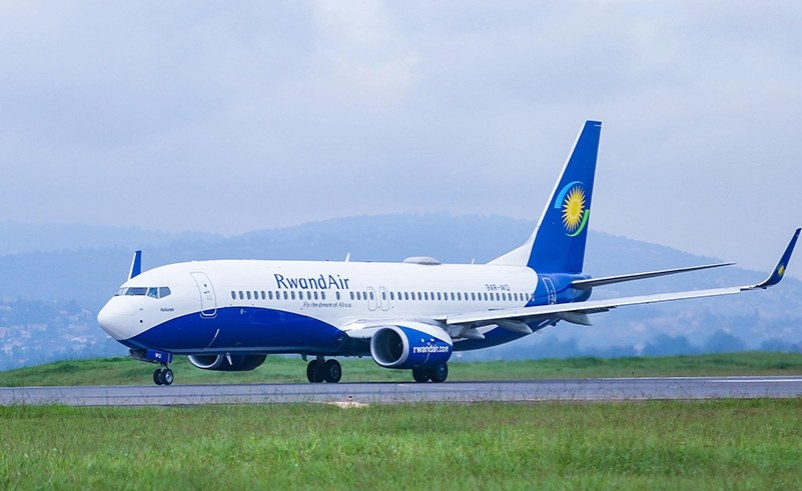
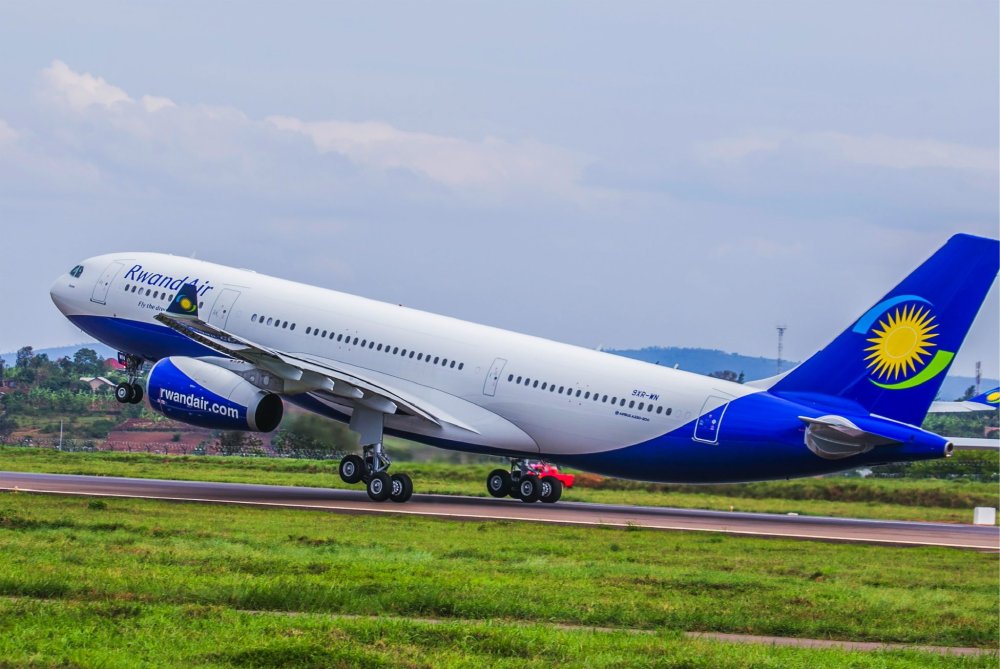
With very few exceptions working for foreign airlines, the majority of pilots trained in Rwanda are employed by RwandAir, the national carrier.
On December 18, 2025, Akagera Aviation School awarded pilot licenses to 18 Rwandan graduates, all of whom were confirmed to be joining RwandAir as pilots. The institution described this as a strong indicator of the demand for skilled aviation professionals in the country.
Some of the graduates shared their experiences, describing the journey as demanding but rewarding, while encouraging young people with similar ambitions to remain disciplined and focused.
Among them was Alice Muhorakeye, who became the seventh female pilot at RwandAir. In 2025 alone, two women graduated from pilot training, joining five others already working for the airline.
She emphasized that piloting requires more than academic success.
“Flying an aircraft is not an easy job,” she said. “It requires sound decision-making, continuous learning, and strong discipline. For women, it demands even greater determination, but I encourage girls who are interested to focus especially on mathematics.”
Muhorakeye added that her first time inside an aircraft cockpit was during her initial flight training, a moment that confirmed her ability and strengthened her ambition.
“Being responsible for something flying in the sky is an indescribable feeling. We are still few women in this field, but we are proud of how far we have come,” she said.
Dominique Niyonkuru, 27, who earned a Commercial Pilot License and was recognized as the best-performing student, said his dream of becoming a pilot began at a young age. After completing high school, he applied for pilot training and met all the requirements.
“My first flight lasted only 15 minutes, but it carried huge responsibility,” he said. “It made me realize how much trust is placed in a pilot. I hope to inspire younger generations and represent my country with pride.”
Another graduate, Arnaud Bertin Semigabo, said he studied Mathematics, Physics, and Geography in high school and later enrolled in university. However, he chose to suspend his university studies in his first year to pursue pilot training.
He noted that aviation studies require exceptional commitment, explaining that operating an aircraft demands a deep understanding of systems and procedures to ensure safety at all times.


Post Comment